
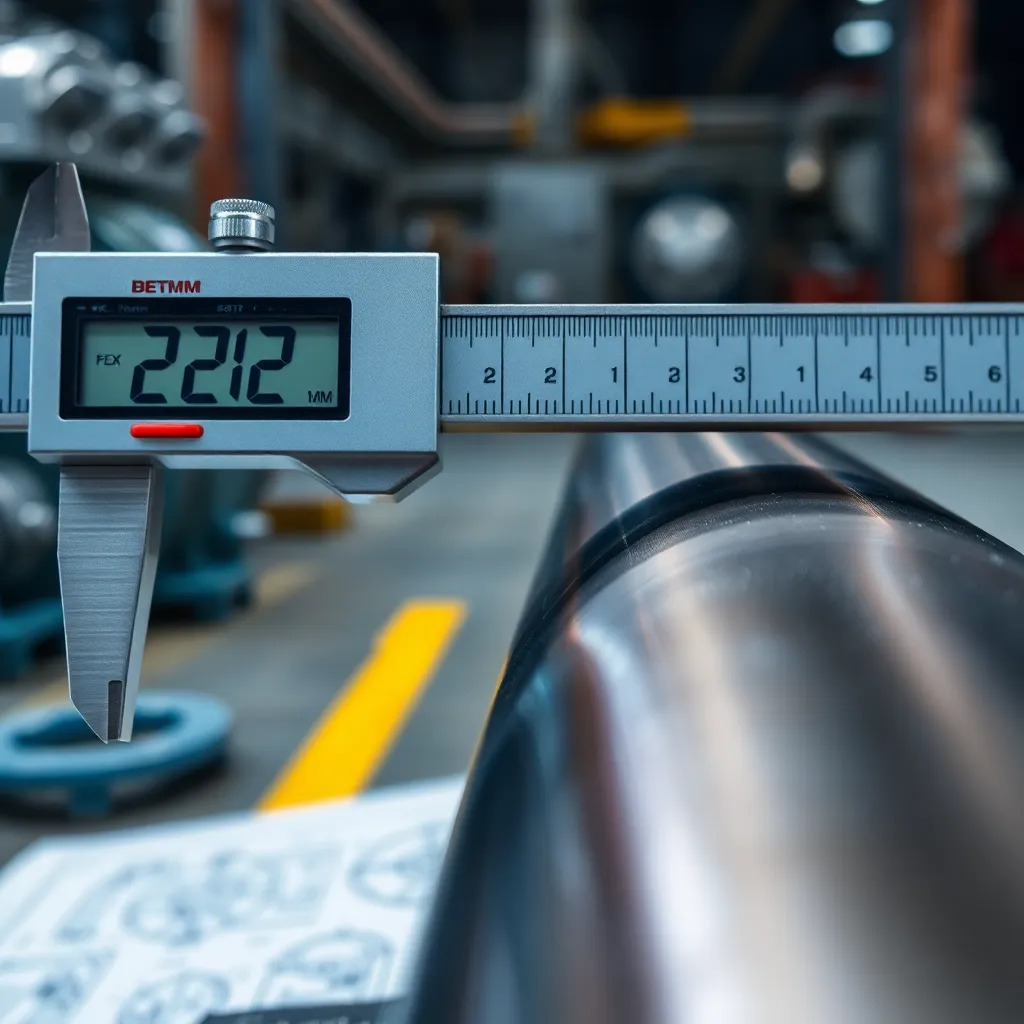
Your project stalls when US-made motors don't fit Malaysian machines. I see this mismatch waste time and money every day. Let’s look at how to fix these technical gaps.
To bridge this gap, you must master the differences between US SAE standards and Malaysia’s ISO-aligned requirements. Success relies on choosing "tropicalized" components that handle extreme humidity while meeting strict SIRIM and CIDB certifications for government-linked infrastructure projects.
If you want to stop equipment downtime and avoid customs headaches, you need to understand the specifics of these two different engineering worlds. I will show you how we manage these challenges.
Technical Compatibility: How Do SAE and Metric Interfacing Challenges Affect Your Build?
Buying a high-quality US motor and finding it won't bolt onto your Malaysian machine is a nightmare. I’ve seen thousands of dollars wasted on simple mounting errors and thread mismatches.
The conflict arises because US hydraulic motors use SAE J744 flanges and imperial NPT threads. In contrast, Malaysia uses metric dimensions and BSPP threads. You must use specific adapters or custom-machined shafts to ensure these two different systems work together safely.
When I talk to engineers in Kuala Lumpur or Johor Bahru, the first thing they complain about is the "Imperial headache." In the United States, we live and breathe SAE (Society of Automotive Engineers) standards. Our Orbit motors, which are the heart of many heavy machines, usually come with SAE J744 mounting flanges. These use inches for the pilot diameter and the shaft size. However, Malaysia follows the British tradition and international ISO standards. This means most local infrastructure projects expect metric dimensions 1{#ref-1}.
If you try to force an imperial shaft into a metric coupling, you risk catastrophic failure. At Fortis Systems Group, I make sure our clients understand that a 1-inch shaft is not the same as a 25mm shaft. It sounds close, but that tiny 0.4mm difference will destroy your equipment under high pressure. This is why we focus so much on precision engineering 2{#ref-2}. We use multi-stage machining to ensure that if you need a hybrid motor—perhaps one with a US-spec internal power unit but a metric mounting face—we can build it exactly to your drawing.
Common Interface Conflicts
The threading systems are another big hurdle. US motors often use National Pipe Thread 3{#ref-3} (NPT) or SAE O-ring boss ports. Malaysian projects almost always use British Standard Parallel Pipe 4{#ref-4} (BSPP) or metric threads. If you screw an NPT fitting into a BSPP port, it might seem to fit at first. But once the hydraulic system hits 3000 PSI, it will leak or blow out.
Comparison of US and Malaysian Standard Interfaces
| Feature | US Standard (SAE/NFPA) | Malaysian Standard (MS/ISO) |
|---|---|---|
| Mounting Flange | SAE J744 (Imperial) | ISO 3019 (Metric) |
| Shaft Types | Keyed or Splined (Inches) | Keyed or Splined (Millimeters) |
| Port Threads | NPT / SAE O-Ring Boss | BSPP (G-thread) / Metric |
| Measurement Unit | Imperial (Inches/PSI) | Metric (mm/Bar) |
We solve this by offering custom porting options. Because we control our supply chain factories in China, I can tell our production team to tap a motor housing for BSPP even if the rest of the design follows US efficiency standards. This "Western Standards + Eastern Value" approach means you get the best of both worlds without needing messy adapters.
Regulatory Compliance: Are Your US Motors Ready for SIRIM and CIDB?
Missing a local permit can lock your expensive equipment in customs for weeks. I know the deep frustration of seeing a project stall because of a missing SIRIM quality stamp.
Yes, but only if they meet MS ISO 4413 benchmarks. In Malaysia, SIRIM QAS International and CIDB require strict quality validation. US motors built to NFPA standards are highly respected but still need specific local certification for government tenders.

In Malaysia, the regulatory landscape is very specific. SIRIM QAS International 5{#ref-5} is the gatekeeper. They act as the primary certification body. For any imported US hydraulic motor to be used in a significant public project, it must meet MS ISO 4413. This standard covers safety and performance benchmarks for hydraulic systems. If you are a purchasing manager, you cannot simply assume a US-made part is "good enough." You need the paperwork to prove it.
Then there is the CIDB (Construction Industry Development Board). If you are bidding on a government-linked project, like a new bridge or a dam, the CIDB will check every component. They prioritize motors that comply with their quality standards. This is where many US manufacturers fail. They make a great product, but they don't want to deal with the "extra" validation needed for the Southeast Asian market.
The Value of NFPA Benchmarks
Interestingly, the US National Fluid Power Association 6{#ref-6} (NFPA) standards actually provide higher-rated pressure fatigue benchmarks than some international standards. I often use this as a selling point. When I speak to Malaysian CEOs, I explain that while we meet the MS ISO 4413 requirements, our internal testing follows the more rigorous US NFPA rules. This gives them peace of mind that the Orbit motors will not fail under heavy loads.
Key Regulatory Bodies in the Malaysian Hydraulic Market
| Organization | Role in Malaysia | Requirement for Imports |
|---|---|---|
| SIRIM QAS | Certification & Testing | Compliance with MS ISO 4413 |
| CIDB | Construction Oversight | Quality validation for tenders |
| DOSH | Safety & Health | Inspection of pressure systems |
| ISO 9001 | Quality Management | General factory audit baseline |
At Fortis Systems Group, we don't just ship parts; we provide a technical solution. We ensure that our precision-machined components undergo multi-stage polishing and rigorous inspection. This allows us to provide the documentation that SIRIM and CIDB demand. We act as your consultant to make sure your procurement process is smooth and your motors don't get stuck at the port.
Environmental Resilience: Can US Standards Survive Malaysia’s Tropical Climate?
Your equipment might work perfectly in the dry air of Ohio, but it could fail in the heat of Kuala Lumpur. I have replaced too many seals that melted or cracked because of Malaysia’s intense humidity.
Standard US industrial specs often fail in Malaysia’s tropical heat. You need "tropicalized" motors with specialized seals and high-viscosity oil adjustments. These modifications ensure the hydraulic system survives high ambient temperatures and humidity levels that exceed standard US ratings.
The climate in Malaysia is a "silent killer" for hydraulic systems. In the US, many industrial standards are written for temperate climates. We think about standard operating temperatures around 40°C. In Malaysia, the ambient temperature is already high, and the humidity is often above 80%. When a hydraulic motor runs in these conditions, the heat buildup is massive.
I have seen standard seals from US-centric specs become brittle or lose their elasticity much faster than expected. This leads to oil leaks, which then leads to pressure drops and project delays. To fight this, I recommend what we call "tropicalized" components. This involves using Viton 7{#ref-7} or other high-temperature synthetic seals that can handle the heat without degrading. We also have to look at fluid viscosity. The oil that works in a US factory might become too thin in a Malaysian jungle construction site.
Adapting to Urban Noise Standards
Another factor people forget is noise. In many Malaysian urban infrastructure projects, noise emission standards are becoming very strict. Older US industrial standards were often more focused on power than on sound. However, in cities like KL, you need quiet operation. Our precision-engineered Orbit motors use a refined Geroler design 8{#ref-8} that reduces friction and noise. By polishing the internal components to ultra-tight tolerances, we ensure the motor runs smoother and quieter, meeting local environmental regulations.
Environmental Stress Factors: US vs. Malaysia
| Factor | US Industrial Baseline | Malaysia Tropical Environment |
|---|---|---|
| Ambient Temp | 20°C - 25°C | 30°C - 38°C |
| Humidity Level | 30% - 50% | 70% - 95% |
| Seal Requirement | Standard Nitrile | High-Temp Viton / Specialized |
| Corrosion Risk | Low to Moderate | Very High (Salt/Moisture) |
When you work with me, I don't just sell you a motor from a catalog. I ask you where it will be used. If it’s for a coastal project in Penang, I’ll suggest specific coatings to prevent corrosion from the salty air. If it’s for a tunnel project in the city, I’ll focus on noise reduction. This level of technical consulting is what sets Fortis Systems Group apart.
Procurement Dynamics: How Does Standard Selection Affect Your Project Lifecycle?
Long lead times for spare parts can kill your profit margins. I’ve seen projects fail because a simple $50 imperial fitting took three weeks to arrive from overseas.
Choosing US standards in Southeast Asia increases long-term maintenance costs and lead times. However, our hybrid model at Fortis Systems Group solves this. We provide US-quality orbit motors with localized support to ensure your project lifecycle stays on track and under budget.
As a B2B strategist, I have to look at the Total Cost of Ownership 9{#ref-9}. If you buy a motor that follows strictly US Imperial standards, you are locking yourself into a difficult supply chain. In Malaysia, most local suppliers stock metric parts. If a hose blows or a fitting cracks, you can't just go down the street to buy a replacement. You have to wait for an air-shipment from the US. That downtime can cost thousands of dollars per day.
There is also a hidden labor cost. Vocational training in Malaysia is historically focused on British and Japanese metric systems. Your local mechanics might not have the tools or the experience to service a motor that uses imperial bolts and splines. This leads to mistakes, and mistakes in hydraulics are dangerous.
The Fortis Systems Group Solution
This is exactly why we created the Fortis model. We are headquartered in the USA, so we understand the high engineering standards and quality control 10{#ref-10} (QC) that Western buyers expect. But we utilize our proprietary supply chain in China to manufacture parts that can be customized for any market. If you need a motor that has US-grade internal power but uses metric mounting and local porting, we do that easily.
We also simplify the logistics. I know that for many of our clients in Malaysia or Vietnam, the biggest headache is the shipping. That is why we offer Door-to-Door (DDP) logistics. We take care of the customs, the duties, and the local delivery. You don't have to be a shipping expert to get high-quality hydraulic parts.
Impact of Standard Selection on Operations
| Operation Aspect | US Imperial-Only System | Fortis Hybrid/Metric System |
|---|---|---|
| Part Availability | Low (Requires Import) | High (Local Compatibility) |
| Maintenance Cost | High (Specialty Tools) | Normal (Standard Tools) |
| Lead Time | 2-4 Weeks | 3-5 Days (Local Stock) |
| Technical Support | Remote / Limited | Direct / Localized Guidance |
By thinking about the project lifecycle at the start, you save money at the end. I help my clients choose the right standards today so they aren't crying about spare parts three years from now. We are your partner in this, ensuring that your procurement is a competitive advantage, not a bottleneck.
Conclusion
Navigating US and Malaysian standards requires technical expertise and strategic planning. By choosing "tropicalized" and ISO-compatible components, you ensure long-term project success and minimal downtime.
Footnotes
1. Learn about the global transition to the metric system for industrial engineering. ↩︎
2. Explore the technical processes involved in high-precision component manufacturing. ↩︎
3. Detailed specifications for National Pipe Taper (NPT) threads in hydraulic systems. ↩︎
4. Official resources for British standards including BSPP threading requirements. ↩︎
5. Access Malaysia’s leading certification, inspection, and testing body for quality assurance. ↩︎
6. Resources on fluid power standards and innovation from the NFPA. ↩︎
7. Technical properties of Viton fluoroelastomers for high-performance sealing solutions. ↩︎
8. Technical overview of Geroler motor technology for hydraulic efficiency. ↩︎
9. Comprehensive guide to calculating the total cost of industrial equipment ownership. ↩︎
10. Standard practices and principles for maintaining rigorous industrial quality control. ↩︎
